
AI in proposal review: smarter support for human judgement
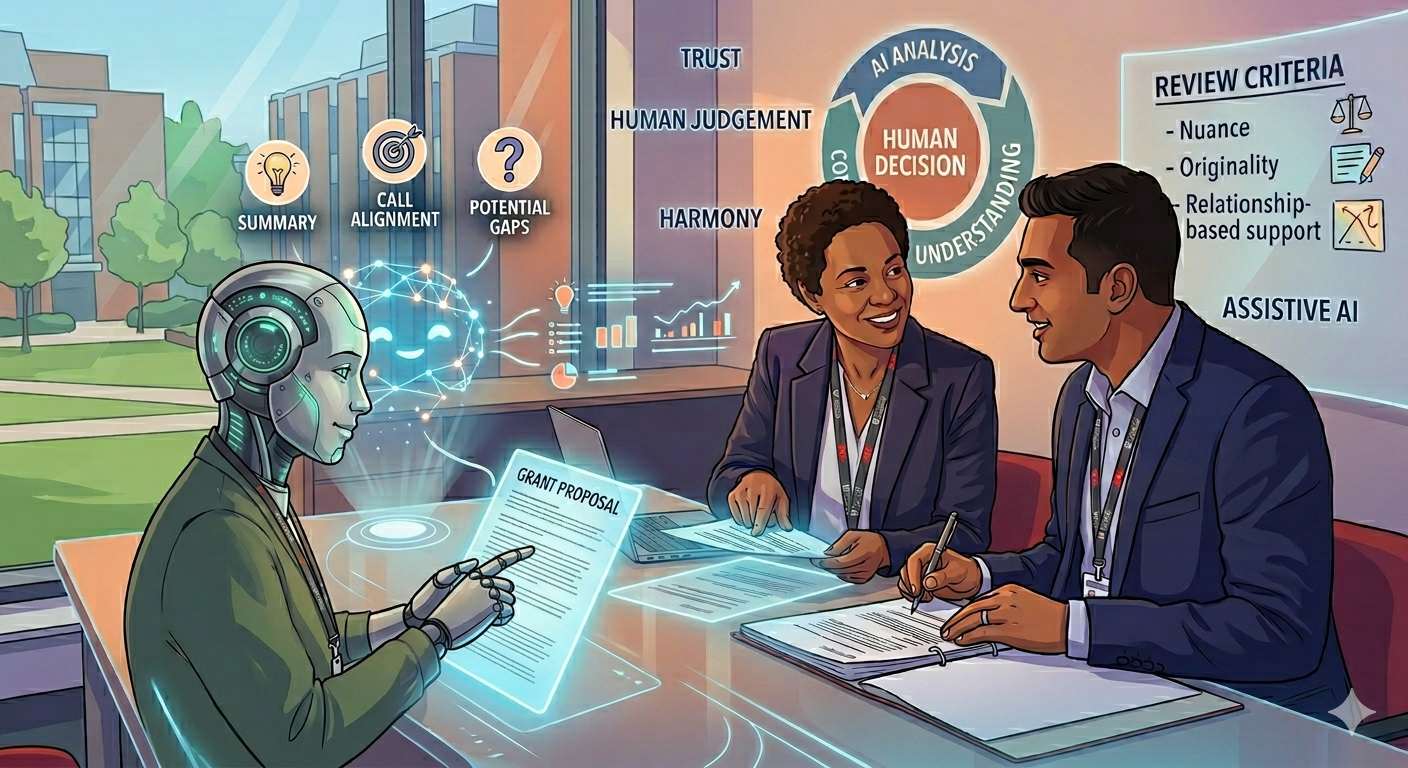
Can AI improve proposal review without replacing human judgement? This article explores where it can add value, where it falls short, and why trust, expertise and relationships still matter.

Can AI improve proposal review without replacing human judgement? This article explores where it can add value, where it falls short, and why trust, expertise and relationships still matter.

Discover how the research cultures of UK HEIs can better support EAL doctoral researchers by addressing hidden language barriers, recognising multilingual strengths, and creating inclusive practices that unlock talent, improve collaboration, and strengthen global research impact.

Research facilitators shape stronger applications, guide strategic funding choices, and bring a critical edge to research in an increasingly competitive landscape. It might start with a budget request, but the role goes far beyond administration. Read on to explore why research facilitators cannot be replaced by AI, and why strategic insight still matters.

This news round-up captures key developments across the UK research landscape from March to May 2026. From funding volatility and UKRI reform, to growing financial pressures, infrastructure challenges and evolving expectations of research governance, catch up on the headlines shaping research management today.

This year marks 20 years of Arts and Humanities Research Council designated Independent Research Organisations or IROs. It offers a time to reflect on the role of cultural institutions in delivering high-quality applied research and how IRO and academic partnerships enhance the benefits for all. It is also a chance to meet the research managers behind the process.

Narrative CVs offer a new way to assess researchers’ track records. In this article, Taryn Bell explains what they are, why funders have introduced them, and how RMAs can support academics navigating this new format.

Get inspired to embed inclusivity into your work processes through a University of Edinburgh case study about Equity, Diversity and Inclusion (EDI) in demand management.

Dr Tania Cleaves discusses her dual identity as a Research Development Manager and ‘alternative academic’, reflecting on the people and universities that have shaped her career.

Sapna Marwaha explores how research security and equitable partnerships intersect, showing that trust, genuine collaboration and open dialogue are essential to strengthening and safeguarding the global research ecosystem.

This review of Getting Research Funded written by Khoo Tseen, Phil Ward, and Jonathan O’Donnell, explores the merits of this sensitive and useful resource alongside what it means to be an early-career researcher in what is an increasingly collaborative and competitive funding landscape.